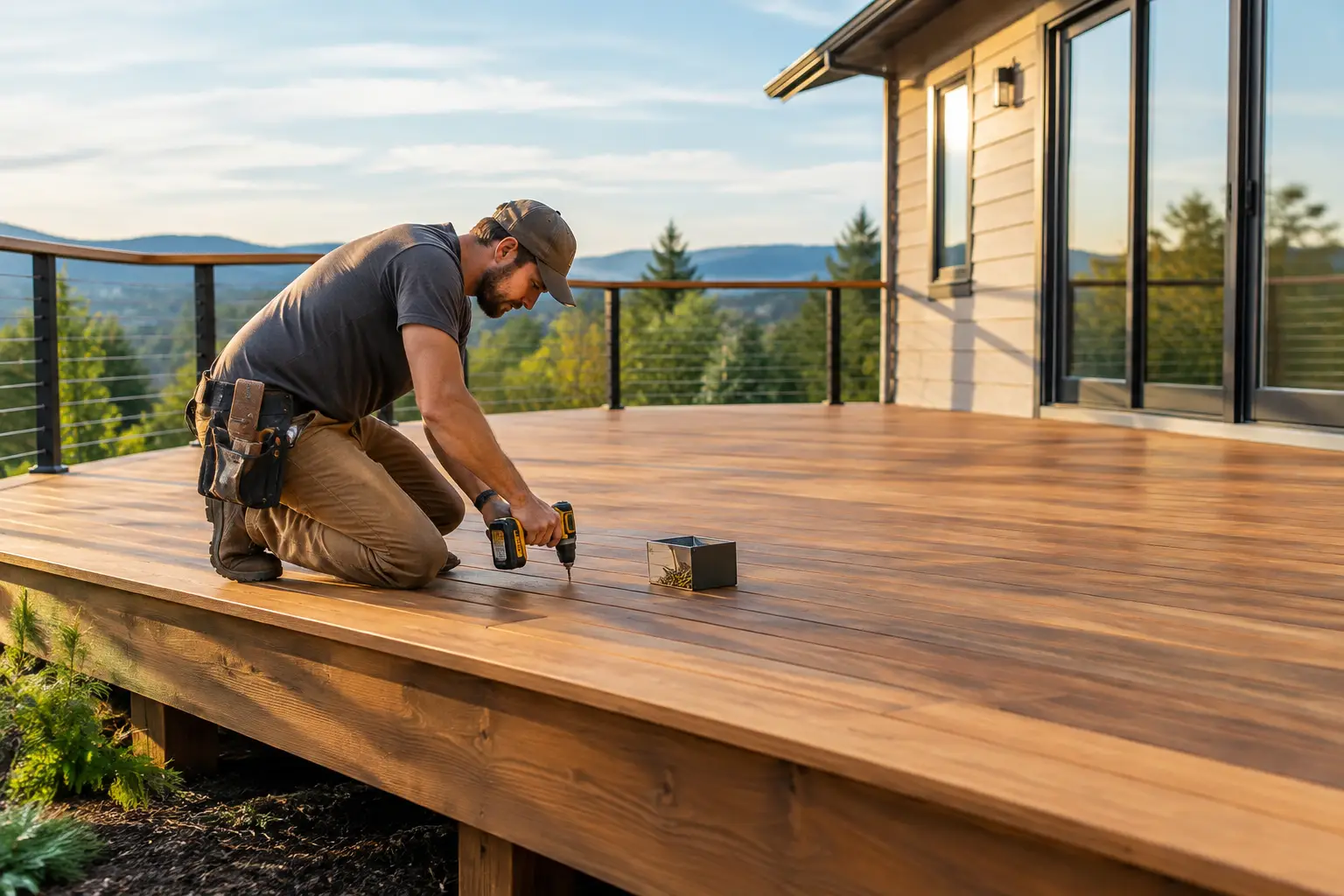
A deck should make your property easier to enjoy, not create a new list of maintenance or safety concerns. The right deck builder Medford homeowners choose will look beyond the surface boards and plan for the slope of the yard, seasonal weather, drainage, structural support, and how the space will actually be used.
For some homes, a simple ground-level platform is the best fit. For others, a raised deck, covered patio, or replacement of an aging structure provides the usable outdoor space the property has been missing. A good result starts with a practical plan and workmanship built for Southern Oregon conditions.
Start With How the Deck Will Be Used
Deck size and layout should follow the way you want to live outside. A small landing outside a back door serves a different purpose than a dining area for family gatherings or a larger space with room for grilling, seating, and shade. Starting with function helps prevent a deck that feels undersized, awkwardly shaped, or disconnected from the home.
Think about traffic first. Doors should open into clear walking space, stairs should lead naturally into the yard, and grill areas need safe separation from siding and railings. If the deck will be used for meals, measure the table and chairs you expect to use, including the room needed to pull chairs back. These details are simple, but they have a major effect on whether the finished space feels comfortable.
The site itself also guides the design. Sun exposure, views, privacy from neighboring homes, existing trees, and the grade of the lot all matter. A deck that receives intense afternoon sun may benefit from a roof cover or shade structure. On a sloped property, the framing and footing plan become especially important. The best design balances appearance with the work needed to make the deck safe, accessible, and lasting.
A Deck Builder in Medford Should Plan for Water
Water is one of the biggest threats to exterior wood and framing. Medford’s dry summer weather can make a deck appear trouble-free, while fall and winter rain can expose drainage problems quickly. Water that pools beside the home, splashes against posts, or remains trapped near a ledger board can lead to premature wear and expensive repairs.
Proper deck construction accounts for water before the first board is installed. That can include setting footings at the correct depth, maintaining space between decking boards for drainage, keeping framing clear of soil, and directing runoff away from the foundation. Where a deck attaches to the house, correct flashing is essential. It protects the connection between the deck and the home from water intrusion that may not be visible until damage has already occurred.
Gutters and downspouts deserve attention as well. A roof valley or downspout that drains directly onto a deck can stain boards, create slippery areas, and saturate the ground around posts. In some cases, a deck project is the right time to improve the drainage plan around the home. Addressing connected exterior issues together often protects the investment better than treating each problem separately.
Choose Materials for Maintenance, Appearance, and Budget
There is no single best deck material for every property. The right choice depends on the desired look, expected upkeep, budget, and exposure to sun and moisture. A contractor should explain the trade-offs clearly rather than pushing one material for every job.
Pressure-treated lumber remains a practical option for framing and can also be used for decking. It offers a traditional appearance and an affordable starting point, but it needs regular care. Cleaning, staining, and sealing help protect the boards from moisture, sun exposure, cracking, and fading. Wood can be a strong choice for homeowners who value a natural look and are prepared for routine maintenance.
Composite decking generally requires less upkeep and comes in a range of colors and finishes. It can be a good fit for busy homeowners who want a more consistent appearance over time. However, composite materials cost more upfront, can retain heat in direct sun, and still require correct spacing and support. Material warranties also do not replace good installation practices.
Railings should match both the style of the home and the purpose of the deck. Wood, metal, and composite railing systems each create a different look and maintenance requirement. A simple, durable railing may be the better value for a working family deck, while a more open design may make sense when preserving a view is the priority. The important part is that the system is secure, properly installed, and suited to the structure.
Strong Framing Matters More Than What You See
New deck boards can make an old deck look better for a short time, but they cannot fix weak framing, deteriorated posts, or an unsafe connection to the house. When replacing or building a deck, the structure underneath deserves the same attention as the finished surface.
A well-built deck uses appropriate footings, posts, beams, joists, fasteners, and hardware for the design and load requirements. Connections need to remain secure through changing weather and everyday use. Stairs and guardrails are also critical safety components, not just finish details. Their height, spacing, attachment, and support should be handled carefully.
Permit requirements can vary based on the size, height, location, and design of the project. A local contractor can help determine what applies and build with those requirements in mind. This is particularly valuable for raised decks, decks attached to a home, or projects involving stairs, covers, and structural changes.
If an existing deck has soft boards, visible rot, loose railings, sagging areas, or movement around posts, do not assume a surface repair is enough. An honest assessment may show that targeted repairs are reasonable, or it may reveal that replacement is the safer long-term choice. The right answer depends on the condition of the full structure.
What to Expect From a Reliable Deck Builder Medford Homeowners Can Call
A deck project should not leave you guessing about what is being built, which materials are included, or when work will happen. Before construction starts, you should have a clear conversation about the layout, material choices, site conditions, drainage concerns, and scope of work. That is the foundation for a more predictable project.
Ask whether the contractor will inspect the existing framing if the project involves a replacement deck. Discuss how the deck will connect to the home, where stairs will land, and whether any gutter, fence, or small framing work should be coordinated at the same time. Combining related exterior improvements can reduce disruption and create a more finished result.
Clear communication also matters when conditions change. Hidden damage, uneven ground, or older construction details sometimes become visible only after work begins. A dependable contractor explains the issue, outlines the practical options, and keeps the property owner informed before moving forward.
Joe Hobson Construction approaches decks as part of the larger exterior of your home. That means considering how the finished space works with roofing drainage, siding, walkways, fencing, and the overall appearance of the property. The goal is straightforward: build an outdoor area that is safe, useful, and made to hold up over time.
Plan for Value, Not Just the Lowest Price
The lowest estimate may leave out important work such as demolition, proper flashing, drainage adjustments, upgraded hardware, or disposal of old materials. A higher estimate is not automatically the better one either. Compare the scope, materials, structural approach, and communication you receive, not just the final number.
A durable deck adds value through daily use as much as resale appeal. It creates a defined place to gather, gives you a cleaner transition from house to yard, and can make an underused part of the property feel finished. Spending carefully on sound framing and water management is usually a better long-term decision than choosing a surface material that hides weak construction below.
Before you commit, request a free estimate and talk through the conditions of your specific property. A deck built around your yard, your home, and your plans for using it will provide more comfort and fewer surprises for years to come.