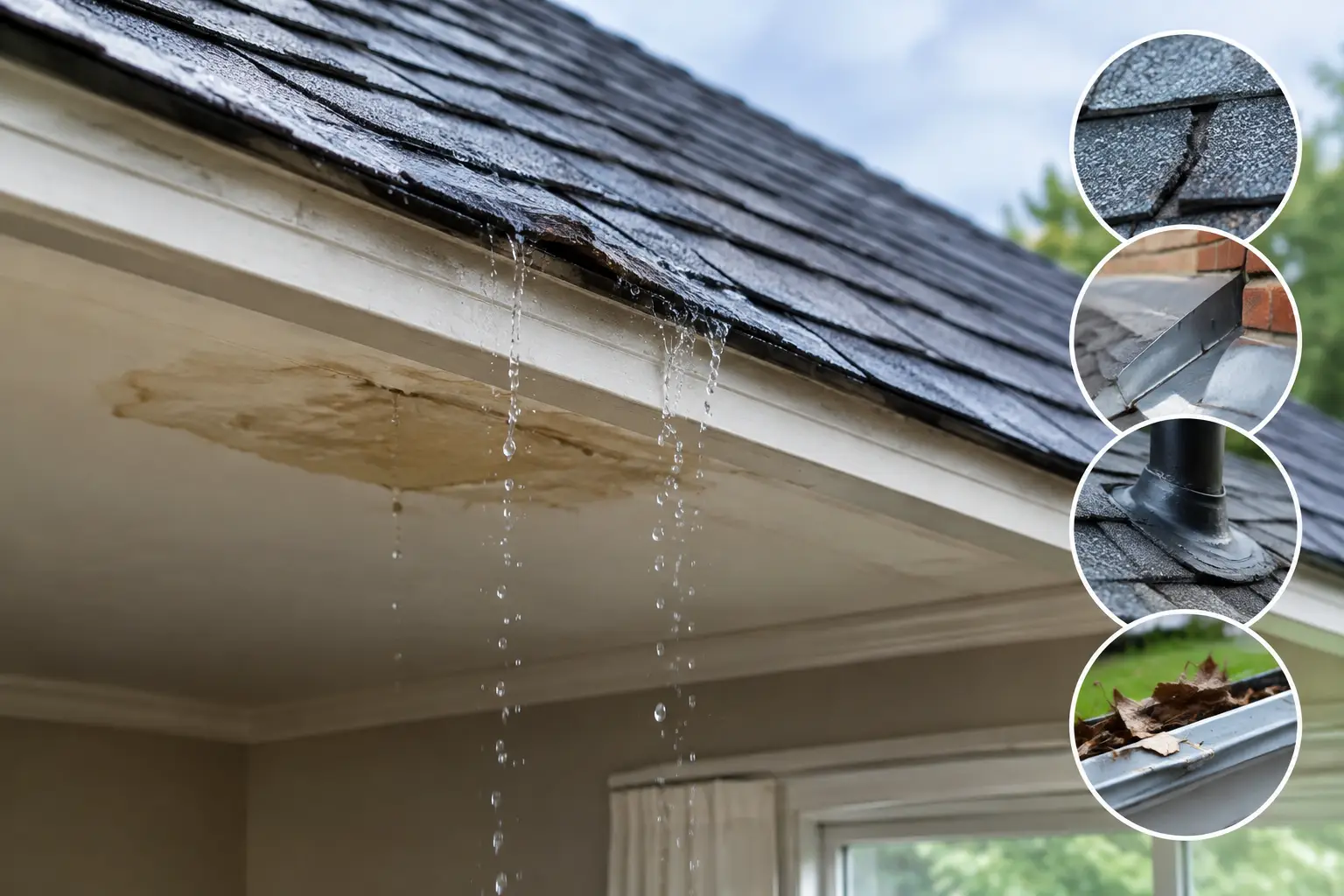
A roof leak rarely starts as a dramatic ceiling stain. More often, water finds a small opening during a hard rain, moves beneath the roofing, and travels before it becomes visible indoors. That is why roofs leak in places that can seem unrelated to the stain itself. Finding the real source takes a close look at the entire roofing system, not just the spot where water finally appears.
For homeowners and property owners in Southern Oregon, timing matters. Rain, wind, summer heat, and seasonal debris all put pressure on roofing materials, flashings, gutters, and the areas where one surface meets another. A prompt inspection can turn a manageable repair into peace of mind instead of a larger project involving damaged sheathing, insulation, siding, or interior finishes.
Why Roofs Leak: The Most Common Causes
Roofing is a system of layers and details designed to direct water off the building. When one component is worn, damaged, or improperly installed, water can get behind the outer surface. The most common causes tend to be straightforward, but the repair is not always as simple as replacing one shingle.
Aging and worn roofing materials
Every roofing material has a service life. Composition shingles can lose protective granules, curl at the edges, crack, or develop bald areas after years of sun and weather exposure. Wood shakes and shingles can split, warp, or decay when moisture remains trapped. Even durable metal roofing needs sound fasteners, properly sealed penetrations, and correct trim details to keep water moving where it belongs.
Age alone does not mean a roof is actively leaking. A well-installed roof can continue performing for years, while a newer roof with poor details may fail much sooner. The condition of the material, the quality of previous work, and the way water drains from the roof all matter.
Damaged or missing shingles, panels, and fasteners
Wind can lift shingles, loosen ridge caps, or shift metal panels. Falling limbs and storm debris can puncture roofing or bend flashing. On metal roofs, exposed fasteners may eventually loosen as the panels expand and contract through changing temperatures. A deteriorated washer beneath a fastener can allow water through a very small opening.
These issues are easy to overlook from the ground. A roof may look generally sound while a few damaged areas allow water in during wind-driven rain. Repairs should address the damaged material and the reason it failed, especially if drainage, fastening, or nearby tree limbs contributed to the problem.
Failed flashing around vulnerable areas
Flashing is the metal material that protects roof transitions. It is used around chimneys, skylights, vents, valleys, walls, and other areas where roofing materials meet an opening or change direction. Because these areas handle concentrated water flow, flashing problems are among the most common reasons for roof leaks.
Sealant can dry out and crack. Flashing can corrode, pull loose, or be installed in the wrong sequence. A repair that relies only on caulk may stop water temporarily, but it may not correct a flashing detail that was never properly integrated with the roofing. Lasting repairs require the water-shedding layers to overlap correctly.
Clogged gutters and poor drainage
Gutters do more than keep water from splashing near the foundation. They direct runoff away from roof edges, fascia boards, siding, and walkways. When gutters fill with leaves, needles, and roof debris, water can back up beneath the roof edge or overflow onto exterior surfaces.
In Medford and across Southern Oregon, debris buildup can be especially troublesome around properties with mature trees. A gutter that holds standing water, sags away from the fascia, or sends water behind the gutter needs attention. The right repair may involve cleaning, rehanging, resealing, or replacing sections of the gutter system. It depends on whether the issue is maintenance, damage, or a system that was undersized from the start.
Valleys, low-slope sections, and roof transitions
A roof valley collects water from two slopes and directs it into one channel. It is built to handle heavy flow, but it is also a point where installation details matter greatly. Debris can collect in valleys, and worn materials can allow water below the surface.
Low-slope areas deserve similar attention. Water moves more slowly across them, so small defects can become larger problems over time. Connections between a roof and a wall, porch, addition, or dormer must also be designed to move water outward. These transitions are often where rushed work or aging sealants reveal themselves.
The Leak You See May Not Be the Leak Source
A brown ring on the ceiling is a warning sign, not a map. Water can enter near a roof penetration, run along a rafter or roof deck, and appear several feet away from the original opening. That is why interior patching without a roofing inspection can lead to repeated damage.
Look for peeling paint, soft drywall, musty odors, damp insulation, rusted fasteners, or dark spots in an attic. Outside, watch for granules in gutters, lifted shingles, damaged trim, overflowing gutters, and visible wear around vents or chimneys. If the problem occurs only during wind-driven rain, that detail is useful. It may point to flashing, a roof-to-wall transition, or an opening that ordinary rainfall does not reach.
Do not assume a leak is always from the roof. Condensation in an attic, plumbing leaks, failed siding details, and window flashing problems can also send water into walls and ceilings. An experienced exterior contractor can help separate these issues before unnecessary repairs are made.
When a Repair Makes Sense and When Replacement Is Smarter
A focused repair is often the right answer when the roof is otherwise in good condition and the leak has a clear cause. Replacing damaged shingles, correcting flashing, securing loose metal fasteners, or repairing a gutter issue can restore protection without replacing the entire roof.
Replacement becomes more practical when leaks are recurring, materials are near the end of their life, or multiple areas show widespread deterioration. It can also make sense when homeowners want improved durability, lower maintenance, or a more cohesive exterior update. Metal roofing is a strong option for many Southern Oregon properties because it offers long-term performance, sheds water effectively, and can complement a range of home styles. The right choice still depends on roof design, budget, existing conditions, and installation quality.
If roof replacement is being considered, it is worth looking at connected exterior needs at the same time. New gutters, fascia repairs, siding updates, or small framing corrections may be easier and more cost-effective to complete while the roof work is underway. Addressing the full water-management system helps protect the investment.
What to Do After You Notice a Leak
Move valuables away from the affected area and place a container under active drips if needed. If drywall is bulging with trapped water, avoid standing directly beneath it. Take photos of the stain, the weather conditions, and any visible exterior damage for your records.
Avoid climbing onto a wet or steep roof. Temporary tarps and emergency measures have a place, but they can be unsafe when handled without the right equipment. A professional inspection can identify whether the leak is coming from roofing, flashing, gutters, or another exterior detail and recommend a repair that fits the condition of the property.
Joe Hobson Construction provides clear, local guidance for roof repairs, replacements, metal roofing, and gutter work across Jackson, Josephine, and Douglas counties. A free estimate gives you a practical starting point before a small water issue has time to spread.
A dry ceiling after the next storm is not the only goal. The best repair gives water a dependable path off the roof, away from the structure, and out of your mind when the weather turns.