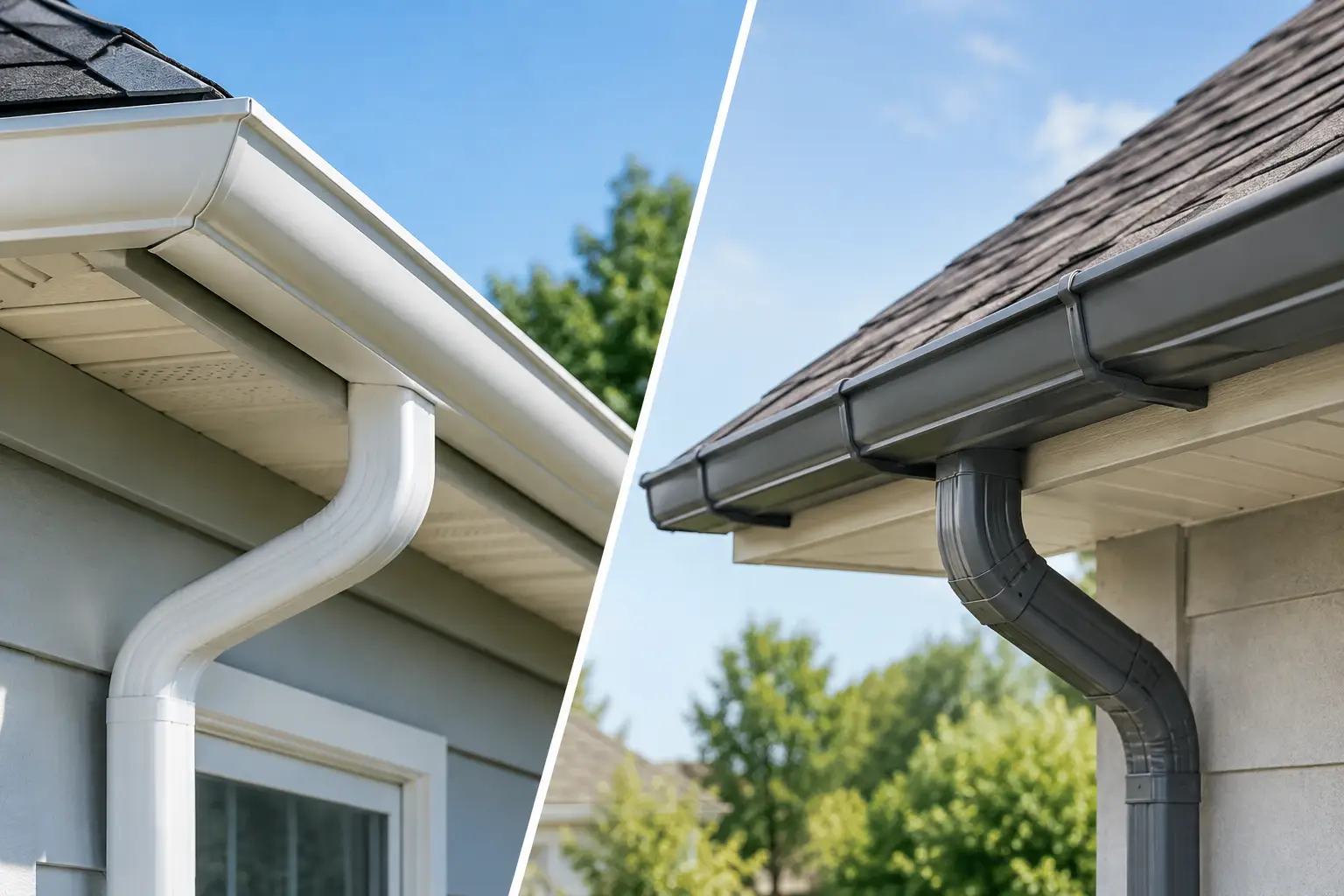
Water rarely announces a gutter problem before it causes one. It runs behind a clogged section, spills over an undersized trough, soaks the soil beside the foundation, or stains siding after a hard rain. When homeowners compare seamless vs sectional gutters, the right choice comes down to more than appearance. It affects maintenance, long-term leak risk, installation cost, and how well the drainage system protects the rest of the property.
For many homes in Medford and throughout Southern Oregon, gutters need to handle heavy seasonal rain, windblown debris, and roof runoff without becoming another repair item. Both gutter types can work well when they are sized, pitched, fastened, and maintained correctly. The differences are worth understanding before replacing an aging system or pairing new gutters with a roofing or siding project.
What Is the Difference Between Seamless and Sectional Gutters?
Sectional gutters are made from pre-cut pieces that are joined together during installation. The straight runs, corners, end caps, and downspout outlets are connected with seams and sealant. They are widely available, can be installed in standard lengths, and are often a practical fit for smaller projects or homes with simple rooflines.
Seamless gutters are formed from a continuous piece of metal on-site to match the length of each roof edge. They still have joints at corners, end caps, and downspout outlets, but they do not have seams along the straight portions of the gutter run. Most are made from aluminum, though other material options may be available depending on the project.
That distinction matters because every joint is a potential place for sealant to age, debris to catch, or water to find a way out. It does not mean sectional gutters will automatically fail or that seamless gutters never leak. Good workmanship and regular upkeep matter with either system.
Seamless vs Sectional Gutters: The Practical Comparison
Leak resistance and water control
The main advantage of seamless gutters is fewer joints. A long, continuous run has fewer places where water can work through failing sealant over time. This is especially helpful on long eaves where a sectional system may require several connected pieces.
Sectional gutters have more sealed connections, so they require closer attention as they age. Temperature changes, standing water, and debris can all shorten the life of sealant at a joint. If a seam begins to leak, it can often be repaired without replacing the entire gutter, but repeat repairs can become frustrating on an older system.
For a property with long rooflines, mature trees, or areas where overflow could damage a walkway, landscaping, siding, or foundation, fewer seams provide a meaningful maintenance advantage. Proper slope remains critical. Even the best gutter material will hold water if it is not pitched correctly toward the downspouts.
Appearance and fit
Seamless gutters offer a cleaner, more tailored look because each straight section is made to fit the home. That can be a noticeable benefit on newer construction, metal-roofing projects, or homes where exterior appearance is a priority. The consistent lines help the gutter system look like part of the building rather than an added component.
Sectional gutters can also look clean when installed carefully, particularly on modest homes with shorter roof edges. However, the visible connectors can make the system look more pieced together. Color, profile, and material selection make a difference here. A gutter that complements the roof, trim, and siding can improve curb appeal while doing its primary job of moving water away from the structure.
Cost and installation
Sectional gutters usually have a lower upfront material cost. Standard lengths are readily available, and repairs or small additions can be straightforward. This may make them a sensible choice for a detached garage, shed, rental property, or a tight project budget.
Seamless gutters generally cost more because they are custom formed on-site and professionally installed. The higher initial investment often makes sense when homeowners want a longer-lasting system with fewer maintenance points. On a full exterior upgrade, the added cost can be small compared with the protection gutters provide to roofing, fascia, siding, and the area around the foundation.
Price should not be the only deciding factor. A lower-cost gutter system that is undersized, loosely attached, or poorly drained can create expensive problems regardless of whether it is sectional or continuous.
Maintenance requirements
All gutters need maintenance. Leaves, pine needles, granules from aging shingles, moss, and windblown dirt can block water flow. In Southern Oregon, a gutter can appear clear from the ground while a downspout outlet is packed with debris just out of sight.
Sectional gutters need particular attention at seams and connectors. Check for cracked sealant, rusted fasteners, separated joints, and damp spots beneath connections. Seamless gutters reduce the number of straight-run joints to inspect, but their corners and outlets still need routine checks.
Homeowners should clean gutters as needed, usually after heavy leaf drop and before the wettest part of the year. They should also confirm that downspouts discharge away from the foundation. If the system frequently overflows even when clean, the issue may be gutter size, too few downspouts, poor slope, or a roof valley concentrating more water than the existing system can handle.
Durability and repair options
A properly installed seamless aluminum system can provide years of dependable service. With fewer joints, it has fewer places likely to need resealing. If a long section is badly bent by a ladder, fallen branch, or impact, replacement may involve replacing that custom-made run rather than swapping out one short piece.
Sectional gutters are easier to repair in small sections because individual lengths can be removed and replaced. That can be an advantage when damage is isolated. The trade-off is that each replacement or added connector introduces another joint that will need to stay sealed.
Material also affects durability. Aluminum is popular because it resists rust and is available in many colors. Steel can be strong but needs its protective finish maintained. Copper has a distinct appearance and long service life, but it is usually a premium option. The best material is the one that fits the property, budget, and expected maintenance level.
Which Gutter Type Is Right for Your Property?
Seamless gutters are often the better long-term choice for a primary residence, especially when replacing a full system. They are a strong fit for long roof runs, homes with complex drainage needs, and projects where homeowners want clean exterior lines and fewer potential leak points. They also pair well with a new roof because the fascia, drip edge, and drainage plan can be evaluated together.
Sectional gutters can be the right answer when the budget is limited, the roofline is short and simple, or the project involves a small outbuilding. They can also make sense when a homeowner needs a targeted replacement rather than a full system upgrade. The key is to avoid treating them as a temporary fix if water is already causing damage around the home.
The roof itself should guide the decision. Metal roofing, for example, can shed water quickly during a strong storm. Depending on the roof pitch, valley layout, and eave length, the home may need larger gutters, properly placed downspouts, or snow-management considerations. A standard gutter size is not always enough simply because it worked on a previous roof.
Installation Details Matter More Than Most Homeowners Expect
A gutter system performs as one connected system. The troughs need adequate capacity. Hangers must be spaced and secured to support the weight of water and wet debris. Downspouts need enough capacity and should be placed where water naturally collects. Extensions or drainage solutions may be needed to keep discharge from pooling near the foundation or washing out landscaping.
Fascia condition matters too. Gutters attached to soft, rotted, or damaged fascia may pull away over time. If roof-edge repairs, siding work, or fascia replacement are needed, completing those items before a new gutter installation helps protect the investment and produces a cleaner result.
This is why a site-specific evaluation is more useful than choosing solely from a material display or a quick per-foot price. The right system should account for the roof, the building layout, nearby trees, drainage patterns, and the condition of the existing exterior.
A well-built gutter system is quiet insurance for the rest of the home. Whether sectional gutters meet your needs or custom-formed runs are the better fit, choosing the right size and getting the installation details right can keep rainwater where it belongs: moving safely away from your property.